
Best Data Destruction Melbourne Services
Every laptop, server and hard drive that leaves a Melbourne office carries a footprint of the business that used it. Client records, financial files, staff details and login credentials often sit untouched on retired hardware long after the device itself has stopped being useful. This is where data destruction Melbourne services step in, closing the gap between "the computer is old" and "the computer is safe to let go of."
For bulk e-waste generators such as banks, hospitals, schools and corporate offices, data destruction Melbourne requirements aren't a nice-to-have. They rely at the intersection of privacy law, environmental regulation and basic business risk management. This guide walks through what proper data destruction Melbourne actually involves, the standards it should meet, and how to choose a provider who won't leave gaps in the process.
Table of Contents
- Why Data Destruction Melbourne Has Become a Business Priority
- What Real Data Destruction Melbourne Services Actually Include
- Privacy Act Obligations and Victoria's E-Waste Ban
- Methods Used in Data Destruction Melbourne Facilities
- How to Choose a Data Destruction Melbourne Partner
- What Happens After the Data Destruction Melbourne Process Ends
- SND Recycler's Approach to Data Destruction Melbourne
- Frequently Asked Questions
Why Data Destruction Melbourne Has Become a Business Priority
Melbourne's IT asset volumes have grown steadily across every sector, and with that growth comes a stockroom problem. Retired laptops, decommissioned servers and old point-of-sale terminals pile up in storage cupboards, waiting for someone to deal with them properly. Every day they sit there, they represent live risk. Sensitive information on old drives doesn't lose its value to a bad actor just for being outdated.
A single misplaced hard drive can trigger a notifiable data breach under federal law, along with the reputational damage and client trust that goes with it. This is the practical reason data destruction Melbourne services exist. They give organisations a documented, verifiable way to remove that risk permanently rather than hoping a device gets lost in a skip somewhere and never resurfaces.
Beyond the risk angle, there's a compliance angle too, which we'll unpack in the next section. Data destruction Melbourne isn't just about wiping a hard drive. It's a full chain-of-custody process, and businesses that treat it as an afterthought often discover the gaps only once something has already gone wrong.
What Real Data Destruction Melbourne Services Actually Include
A lot of e-waste operators mention data wiping as a line item buried under general recycling. Genuine data destruction Melbourne services look different. They typically include:
- Serial-number logging of every device at collection, so nothing moves without a record
- A defined destruction method matched to the device type and data sensitivity
- Certificates of destruction issued per device, not per bulk pickup
- Secure transport with tracked, sealed vehicles between your site and the destruction facility
- Downstream reporting so you know exactly what happened to each asset after collection
If a provider can't produce a certificate that names the device, the method used and the date of destruction, the service isn't complete. This documentation is what your compliance team, auditors or insurer will ask for if a question ever comes up about a specific device, and it's the piece most cut-price operators skip.
Privacy Act Obligations and Victoria's E-Waste Ban
Two separate legal frameworks make data destruction Melbourne a formal obligation rather than good practice.
The first is the Privacy Act 1988 (Cth). Under Australian Privacy Principle 11, entities holding personal information must take reasonable steps to destroy or de-identify that information once it's no longer needed for the purpose it was collected for, as set out in OAIC's guidance on APP 11. The OAIC's guide to securing personal information treats destruction of data on retired hardware as a core part of this obligation, not an optional add-on.
The second is Victoria's own e-waste rules. Since July 2019, anything with a plug, battery or cord has been banned from landfill and general waste bins across the state. For any device that once held business or customer data, these two obligations stack on top of each other. The hardware needs a compliant recycling channel, and the data on it needs formal, certified destruction. Data destruction Melbourne services that only address one half of this equation leave a business exposed on the other.
Methods Used in Data Destruction Melbourne Facilities
Not every device needs the same treatment, and a reliable data destruction Melbourne provider should be able to explain which method applies to which asset.
Software-based sanitisation uses certified overwriting tools to erase data on hard drives, SSDs and mobile devices, generally following the NIST 800-88 media sanitisation guidelines, a widely referenced US federal standard that Australian providers have adopted for its rigour. This method suits equipment that still has resale or reuse value once the data is gone.
Degaussing uses a powerful magnetic field to scramble the data stored on magnetic media such as traditional hard disk drives and backup tapes. It renders the drive itself unusable afterwards, so it's suited to media that's being retired rather than resold.
Physical destruction, usually industrial shredding, is reserved for high-sensitivity media or drives that have failed and can't be wiped through normal means. This is the method that leaves the least room for doubt, since there's no drive left to recover data from at all.
A provider offering genuine data destruction Melbourne services will typically use a mix of all three, matched to the device and the client's risk tolerance, rather than defaulting to one method for everything that comes through the door.
How to Choose a Data Destruction Melbourne Partner
With dozens of operators now advertising data destruction Melbourne services, the differences between them usually show up in the details rather than the marketing copy. A few questions worth asking before signing on:
Do they log devices by serial number at collection? If the paperwork only tracks weight or bin count, there's no way to prove a specific device was actually destroyed.
Where does destruction happen? Some providers collect in Melbourne but transport equipment interstate for processing. That's not necessarily a problem, but it should be disclosed upfront, along with how chain of custody is maintained in transit.
What certification backs their process? Look for references to recognised frameworks such as NIST 800-88, ISO 27001 for information security, or NAID AAA certification for the destruction process itself. These aren't just badges, they indicate an external audit trail behind the claims.
Can they issue a certificate per device? A single blanket certificate covering an entire pickup is far weaker evidence than serialised documentation for each asset.
Do they handle recycling too? Compliant e-waste recycling and secure data destruction are two different obligations. A provider who's genuinely set up for ITAD services can usually close both loops under one contract, which simplifies reporting significantly.
What Happens After the Data Destruction Melbourne Process Ends
Once destruction is complete, a proper provider will supply a certificate of destruction listing the device, the method used and the date. This document becomes part of your compliance record and is the evidence you'd produce if a client, auditor or regulator ever asked how a specific piece of hardware was handled.
The physical materials then move into recycling. Copper, aluminium, gold and various plastics get recovered and re-enter the supply chain, while hazardous components like lead and mercury are processed separately under environmental controls. For businesses retiring laptops and other end-of-life IT equipment, this final stage is where the environmental and privacy obligations meet, and where a good data destruction Melbourne provider closes the loop with full transparency on what was recovered and what was destroyed.
SND Recycler's Approach to Data Destruction Melbourne
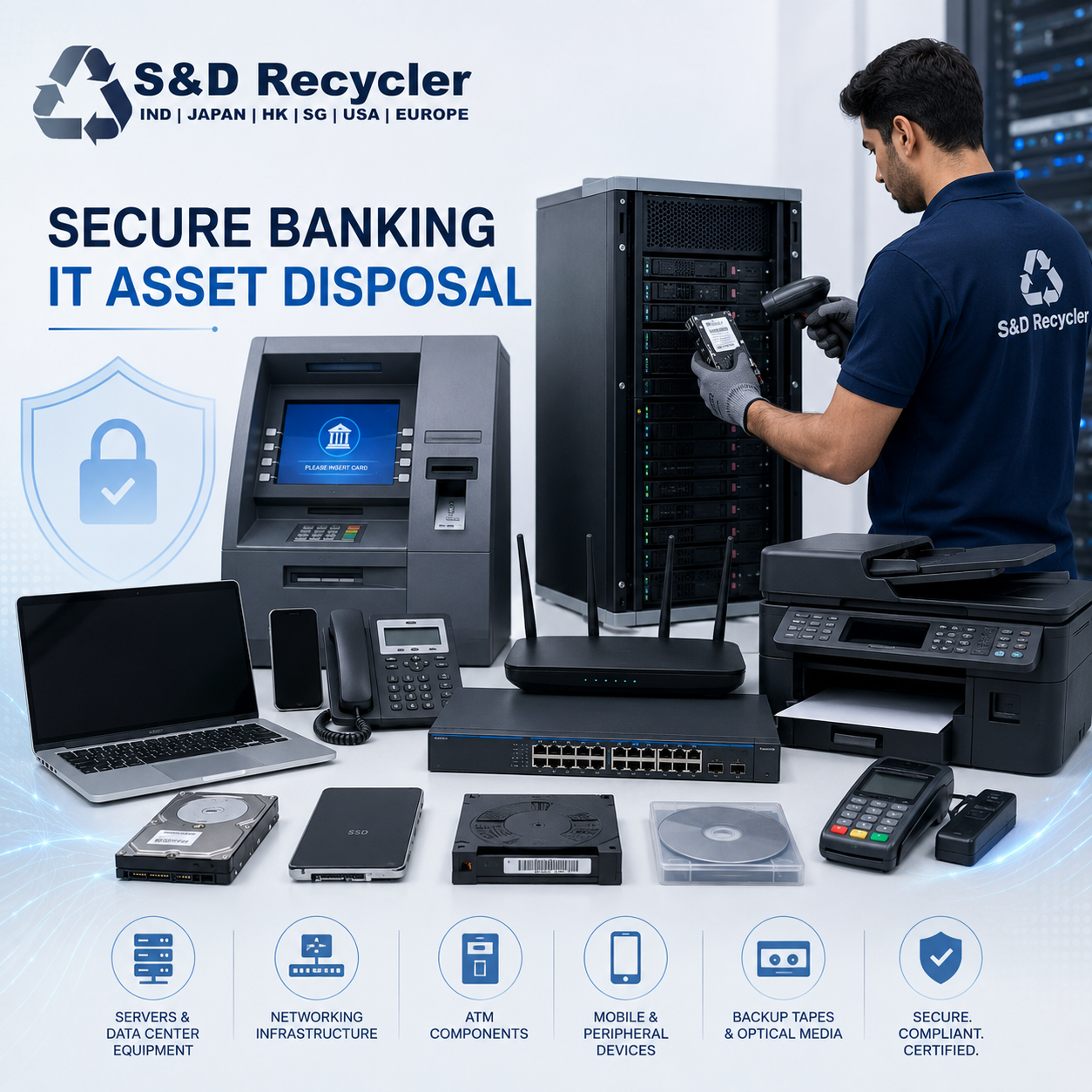
SND Recycler works with businesses across Melbourne that generate e-waste in volume, including offices, healthcare providers and financial institutions retiring fleets of devices at once. Every device collected is logged individually, matched to a destruction method suited to its data sensitivity, and issued with its own certificate once the process is finished. Recycling and data destruction Melbourne obligations are handled under one process, so clients aren't left managing two separate providers or two sets of paperwork for the same batch of equipment.
For organisations planning a bulk retirement of IT assets, getting data destruction Melbourne right from the first collection avoids the scramble of trying to prove compliance retroactively.
FAQs
-
Is data destruction Melbourne a legal requirement for my business?
If your business holds personal or client information under the Privacy Act, destroying that data properly once it's no longer needed is a legal obligation under Australian Privacy Principle 11. Combined with Victoria's landfill ban on e-waste, this makes formal data destruction Melbourne services a compliance necessity rather than an optional service for most organisations. -
What's the difference between deleting a file and proper data destruction?
Deleting a file only removes the reference to it. The underlying data usually remains recoverable with basic tools until it's overwritten or the drive is physically destroyed. Genuine data destruction Melbourne methods, such as certified overwriting, degaussing or shredding, remove the data at a level that standard deletion never touches. -
Can I get a certificate for each device, or only for the whole pickup?
Reputable data destruction Melbourne providers issue serialised certificates per device. If a provider only offers one certificate for an entire bulk collection, ask how they'd prove a specific unit was actually destroyed if that question ever came up. -
Does data destruction Melbourne cost extra on top of e-waste recycling?
Pricing varies by volume and method. Working equipment with resale value can sometimes offset collection costs through a buyback arrangement, while high-sensitivity destruction methods like shredding typically carry a higher cost than software wiping. It's worth requesting a quote based on your specific asset mix rather than assuming a flat rate. -
What happens to hard drives after they're destroyed?
Once data has been rendered irrecoverable, the physical materials move into the recycling stream. Metals and plastics are recovered for reuse, and hazardous components are separated and processed under environmental regulations, keeping them out of landfill entirely. -
How long does the data destruction Melbourne process take from collection to certificate?
This depends on volume and the provider's schedule. Smaller collections are often processed within a few business days, while large-scale office decommissions or site closures may run on a scheduled timeline agreed in advance. Ask your provider for a defined turnaround before booking a collection.
Electronic Waste Recycling
READY TO SPEAK WITH A RECYCLING SPECIALIST?
At S&D Recycler , we make it easy for organizations to do the RIGHT thing with their End of Life Electronic (EOL) IT Equipment. Honest, reliable & secure electronic waste recycling services.